Format
Confirm the display dimensions, orientation and content format before final output.
Branded experiences
For a launch, presentation or branded event, the screen is only one part of what people see. The content, room, viewing distance and way people move through the space all affect how the visual presentation should be planned.
Display context
A graphic that works on a laptop may not work across a large room or on a display people see while walking past it. Branded visual production should consider where the content appears, how long people see it, what information needs priority and whether the display is supporting a presentation, arrival area or another event moment.
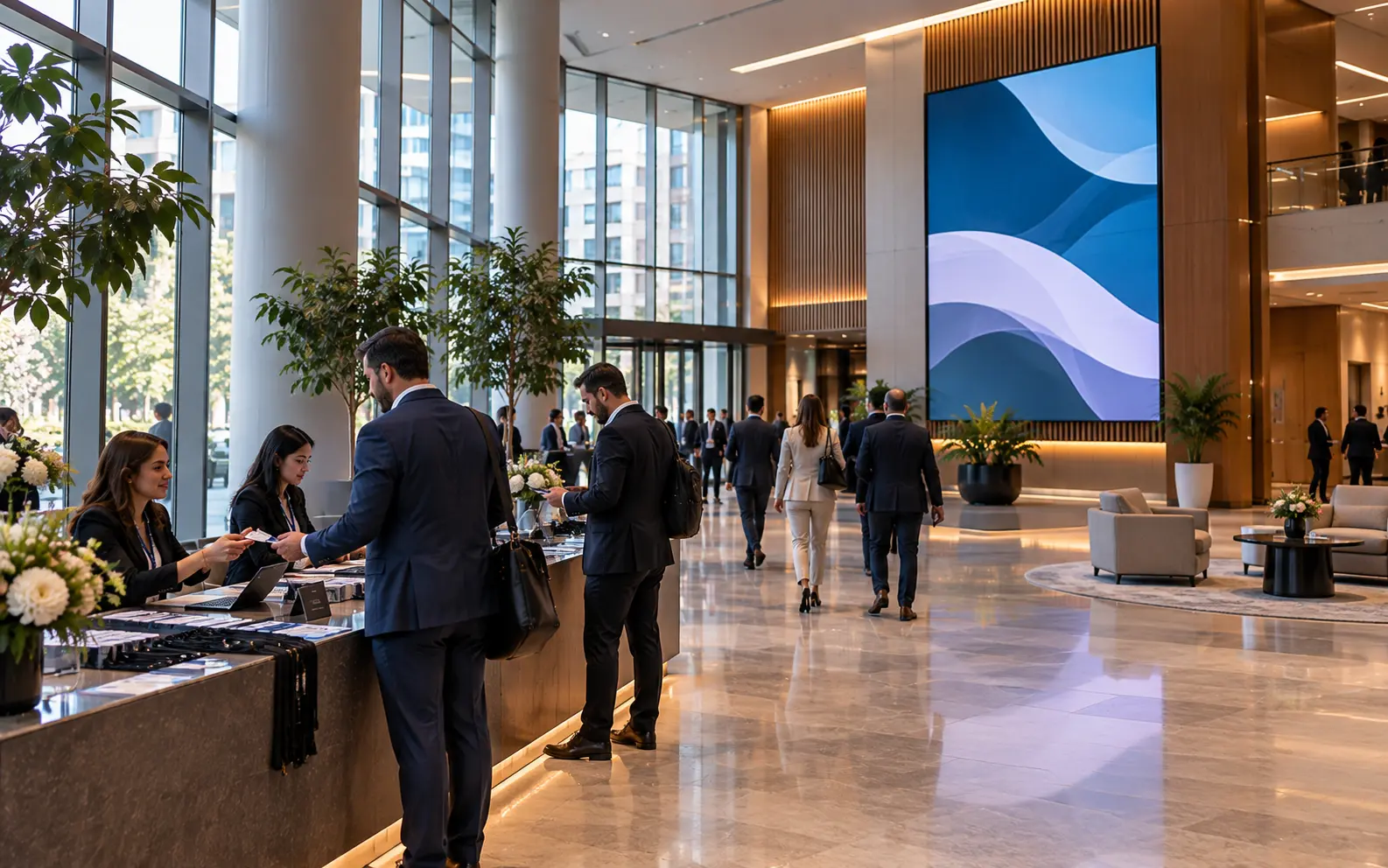
Arrival displays
Entrance and registration displays can present supplied welcome information, event identity and other useful visual content. The priority is making that material readable on the available display surfaces and consistent with what appears in the main presentation area.
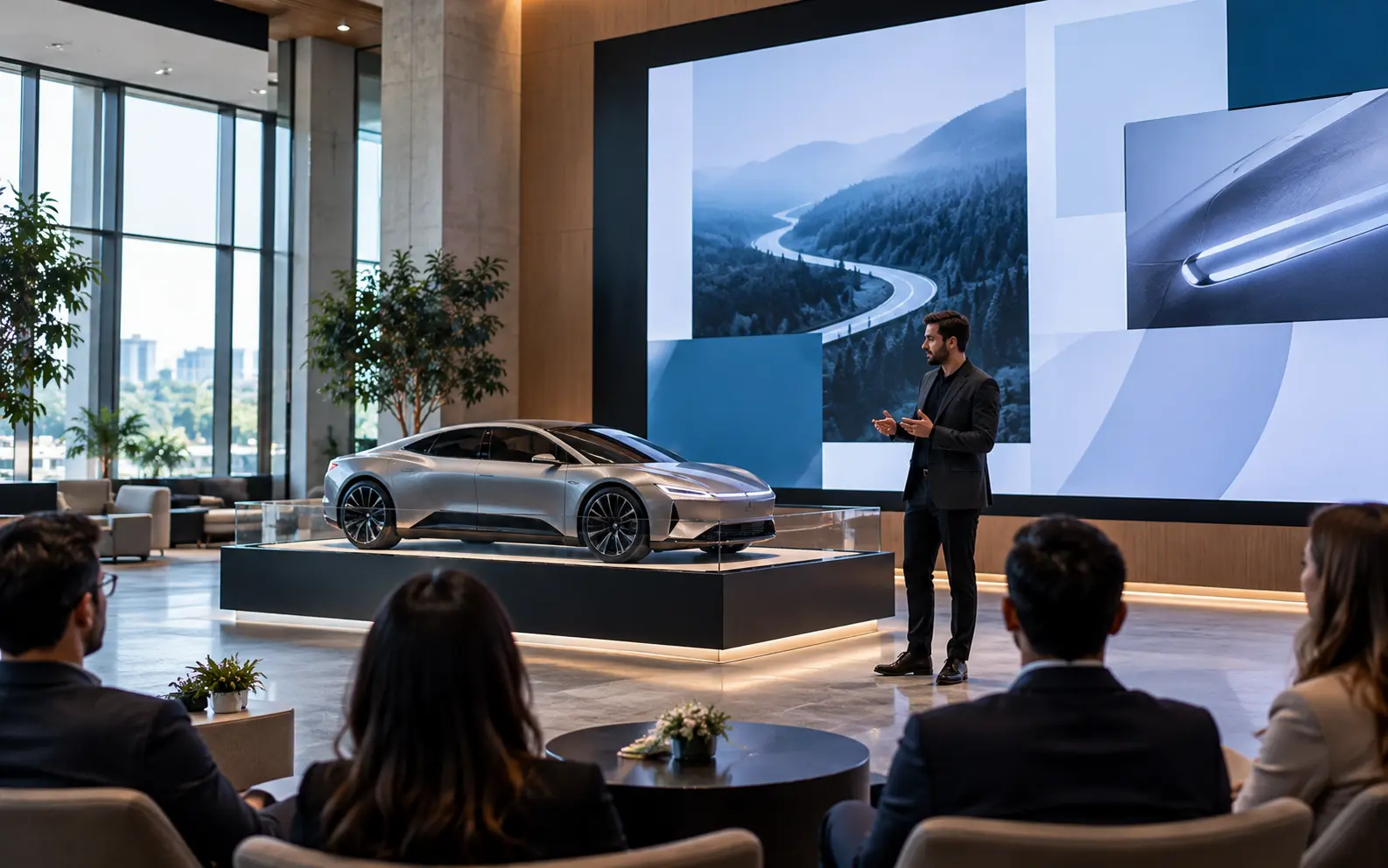
Presentation scale
When content moves from a laptop or small monitor to a large display, layout, type size, contrast and pacing become more important. A presentation that looks fine close-up can become difficult to read from the back of a room.
Provided content may need to be reviewed for the intended display format. If content preparation is part of the agreed scope, that work should focus on the files and versions required for the production.
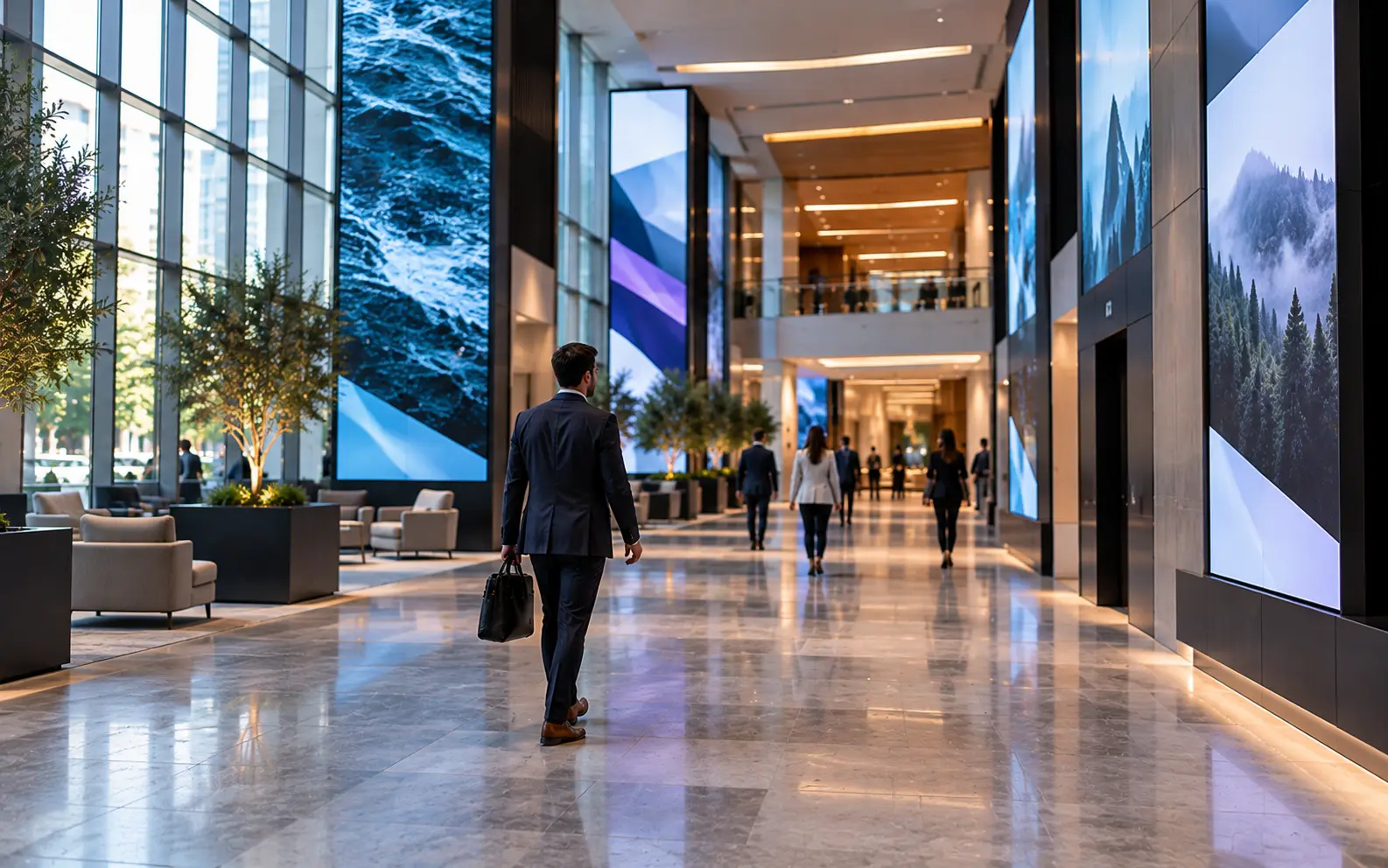
Movement through space
Some visual surfaces are seen while people enter, move between rooms or pass through a lobby. In those situations, content often needs to communicate more quickly than a presentation slide viewed by a seated audience.
Where it fits
These examples describe settings where display-led visual production may be appropriate. They are not presented as past projects or as services that are automatically included.
Content and display
Confirm the display dimensions, orientation and content format before final output.
Review whether text, images and key information remain readable at the intended viewing distance.
Identify which presentation files, videos or visual assets need to appear and when.
Allow time to check provided content on the intended display format when the project allows.
Project workflow
Is the display supporting arrival, a presentation, a launch or another event moment?
Confirm where the display sits and how people will view it.
Identify the provided graphics, presentations, video and other visual assets.
Confirm format, scale, readability and playback requirements.
Confirm the files, timing and remaining production details before the event.
Regional coverage
Projects can be scoped in Washington DC, Maryland and Northern Virginia. The venue and display environment should be understood early because the same content can behave very differently in a conference room, lobby, auditorium or large event space.
View our service area →Planning FAQ
This service focuses on presenting branded visual content through appropriate display surfaces for launches, presentations and event environments.
No scenic fabrication, custom structures, exhibit construction or booth construction is implied by this service.
Yes. LED wall production can be considered when a large-format LED display is appropriate for the room and supplied content.
Existing graphics, presentations and video may be used after their format and suitability for the intended display are reviewed.
Screen proportions, resolution, text size, contrast, pacing, playback sources and viewing distance should be considered.
Corporate or event video production can be scoped separately when recorded content is also required.
Projects can also be scoped in Maryland and Northern Virginia, depending on the venue and production requirements.
Start a project
Share where the visuals will appear, what content already exists and how people will view it. That information helps identify the display and production requirements that matter.
Request a Quote ↗