Room dimensions
Available width, height and depth establish the physical starting point.
LED wall production
Screen setup is considered with the room, stage, content, viewing positions and schedule so the technical direction fits the event as a whole.
Start with context
Available width, height and depth establish the physical starting point.
Attendance and seating orientation affect how the screen must serve the room.
The nearest and farthest seats help shape scale and visual clarity.
The screen should relate cleanly to presenters, scenic elements and camera positions.
Aspect ratio, resolution and source material influence the configuration.
Load-in, rehearsal and program timing determine the production plan.
Three things to plan together
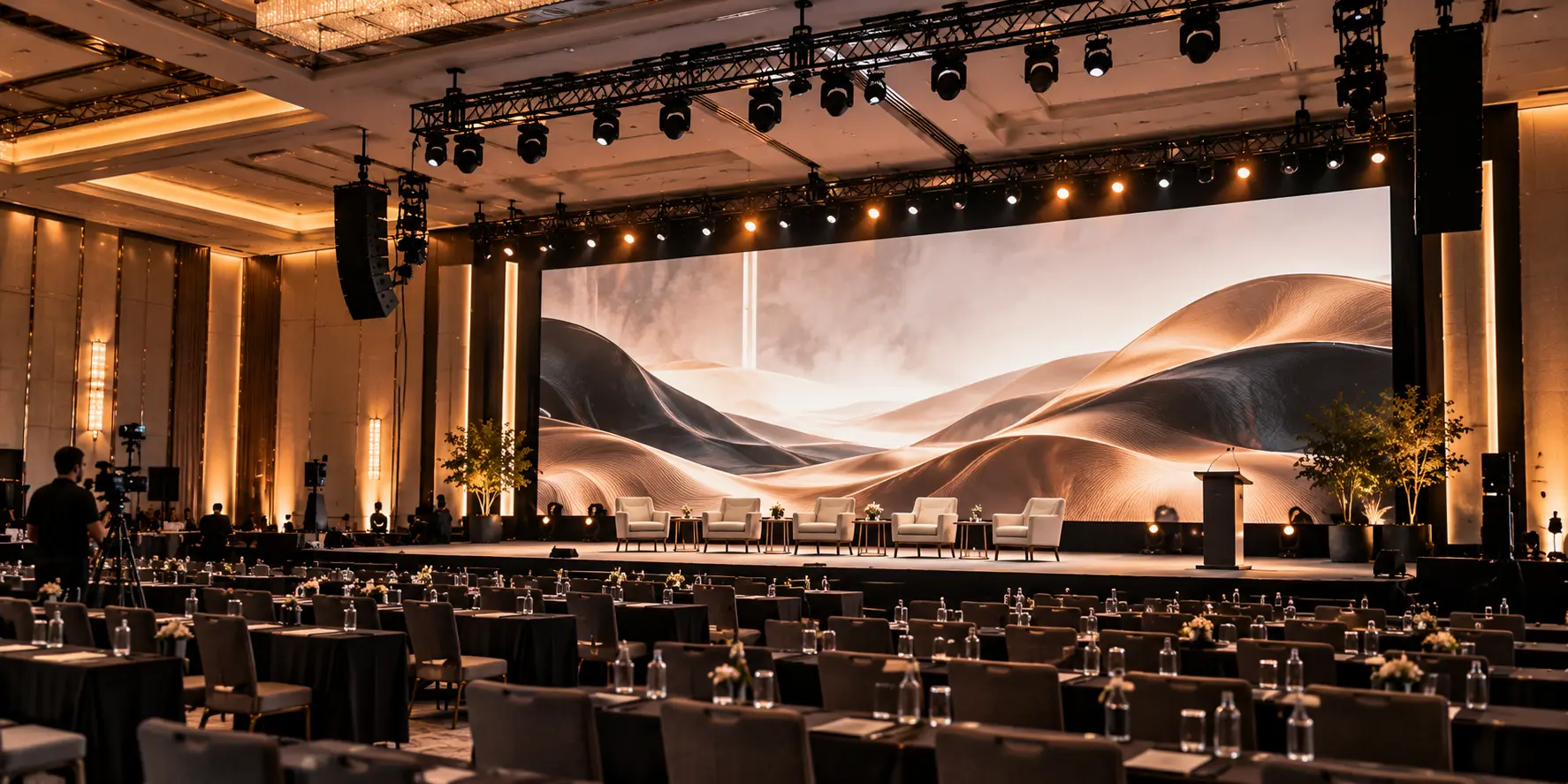
Room dimensions, seating orientation, sightlines and viewing distance establish how the wall needs to function for the people in the space.
Width, height and placement should support the stage plan, presentation format and the practical limits of the venue.
Aspect ratio, resolution, presentation sources, playback responsibility and review timing should be coordinated before event day.
Technical coordination
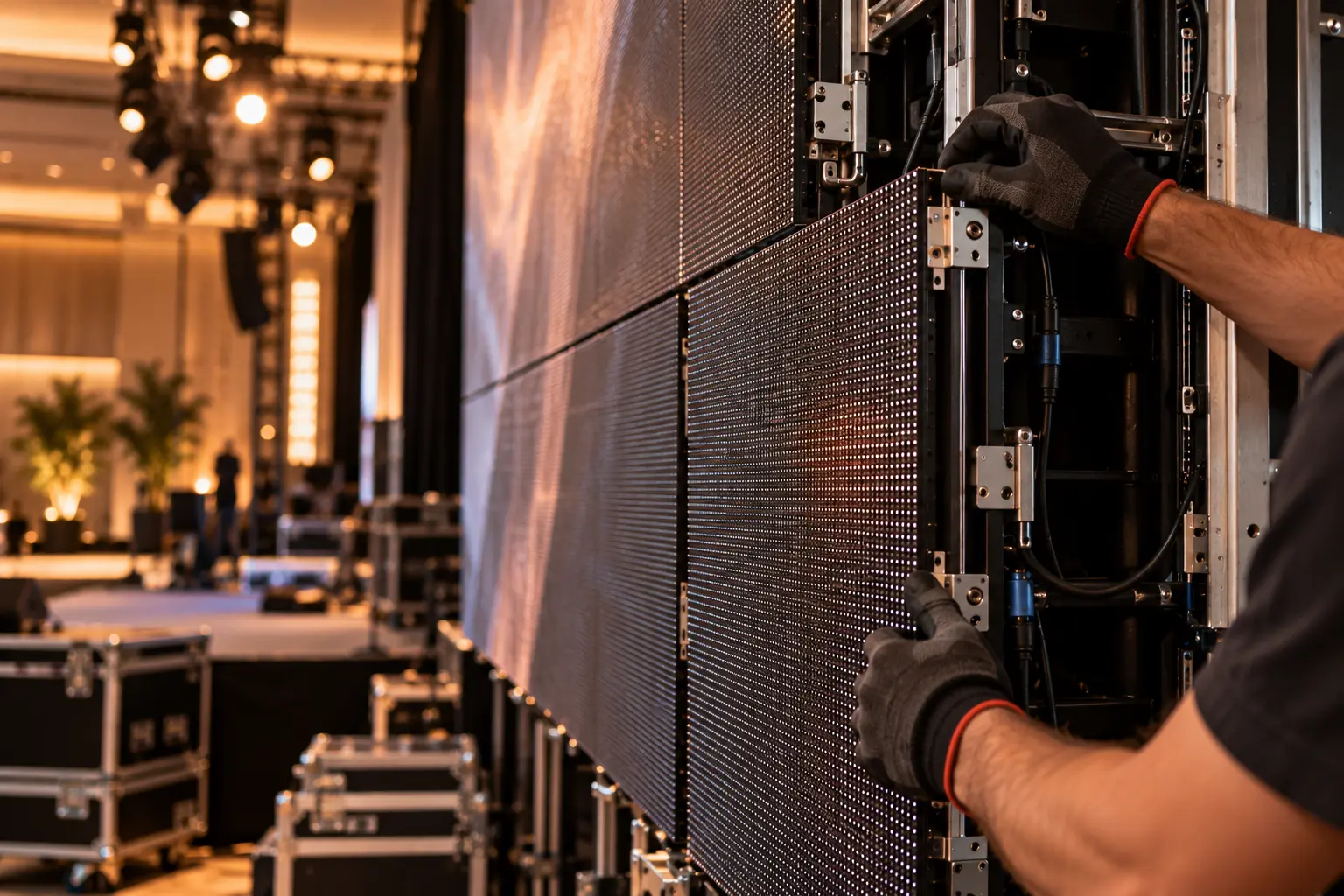
Venue access, stage relationships and the load-in window affect how the installation can move. Playback sources, camera positions and the program schedule add another layer of coordination.
Reviewing those details early helps define responsibilities and gives the onsite work a practical sequence.
See video production planning →Production workflow
Review the venue, audience, program and available schedule.
Develop a screen direction that fits the room and content.
Coordinate content, playback responsibilities and logistics.
Install, test and operate the agreed production setup.
Complete strike and the production closeout after the program.
Event applications
Support keynote content, program graphics and audience visibility across the room.
Create a practical focal point for presentations, speakers and internal programming.
Keep detailed material legible while respecting the room and stage composition.
Accommodate varied sessions, speakers and presentation sources within one program.
Use large-format content where visibility and flexible messaging matter.
Coordinate scenic visuals, program content and camera considerations together.
Planning checklist
LED wall FAQ
A few details can change the right screen setup before the event is ever on site.
Room dimensions, audience sightlines, viewing distance, stage layout and content format all inform the working configuration.
Share the date, venue, audience, room or stage plan, program schedule and available content details.
Yes. Available space, access, stage layout and general production requirements must be considered for each venue.
Presentation content can be part of the plan. Its format, aspect ratio and playback workflow should be reviewed before event day.
Camera framing, brightness relationships, content and the wider lighting environment can be considered during planning.
Content readiness, schedule, venue coordination, load-in, stage relationships and playback responsibilities should be clarified.
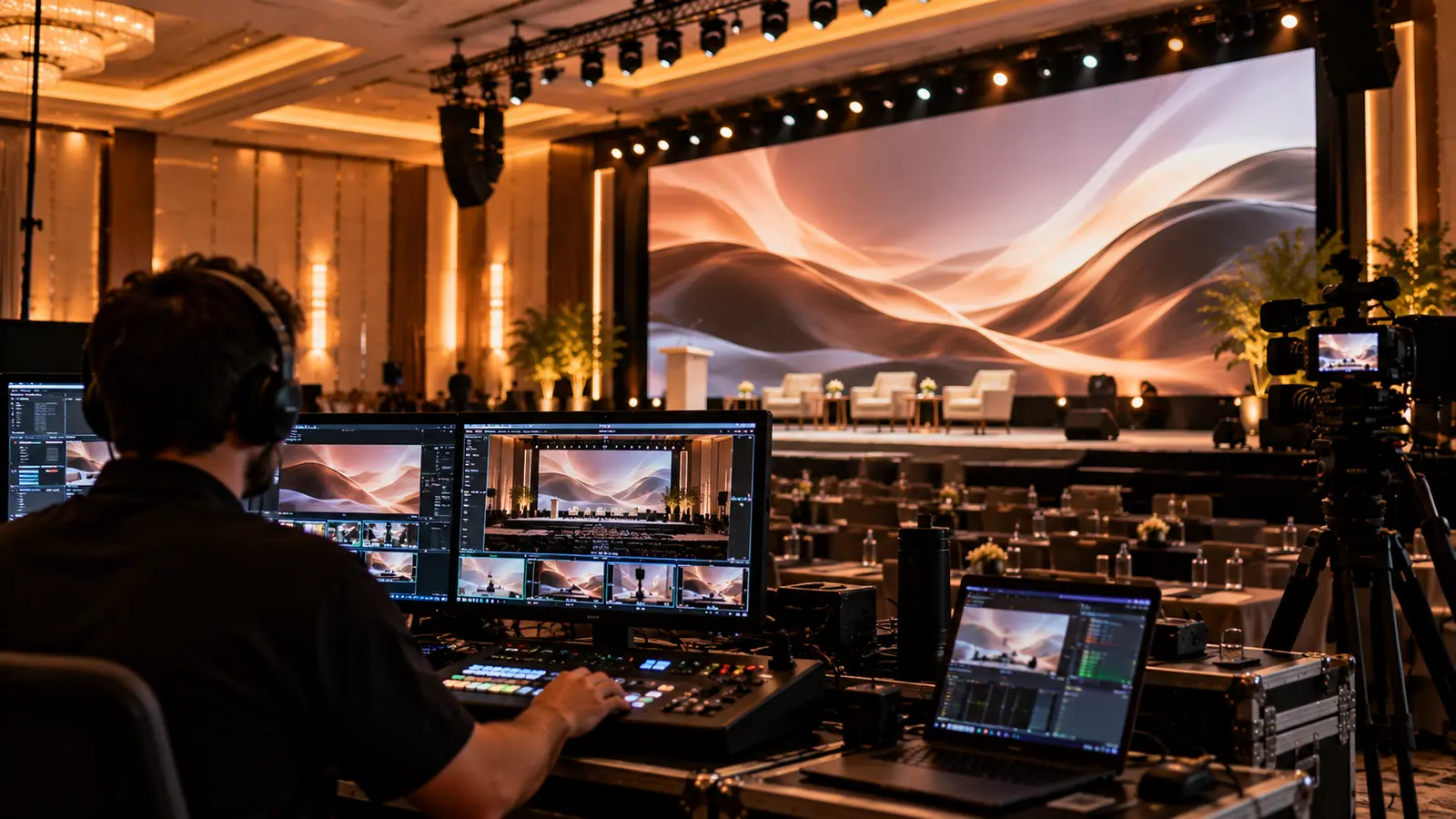
Yes. A connected scope can account for both the live audience and recorded output.
The primary service area covers the wider Washington DC metropolitan region.
Start the conversation
Share the venue, event date, audience and content requirements and we can start with the right production questions.