Topics
What information needs to come from the contributor.
Interview production
A strong interview depends on more than the camera. The questions, room, background, available time and how comfortable the contributor feels can all change the quality of the recording.
Purpose and audience
Before deciding how the interview should look, it helps to know who is speaking, who will watch, what topics need to be covered and how the footage will be used.
The contributor, audience, purpose, available time and final use give the recording a practical direction without making the process more complicated than it needs to be.
Question planning
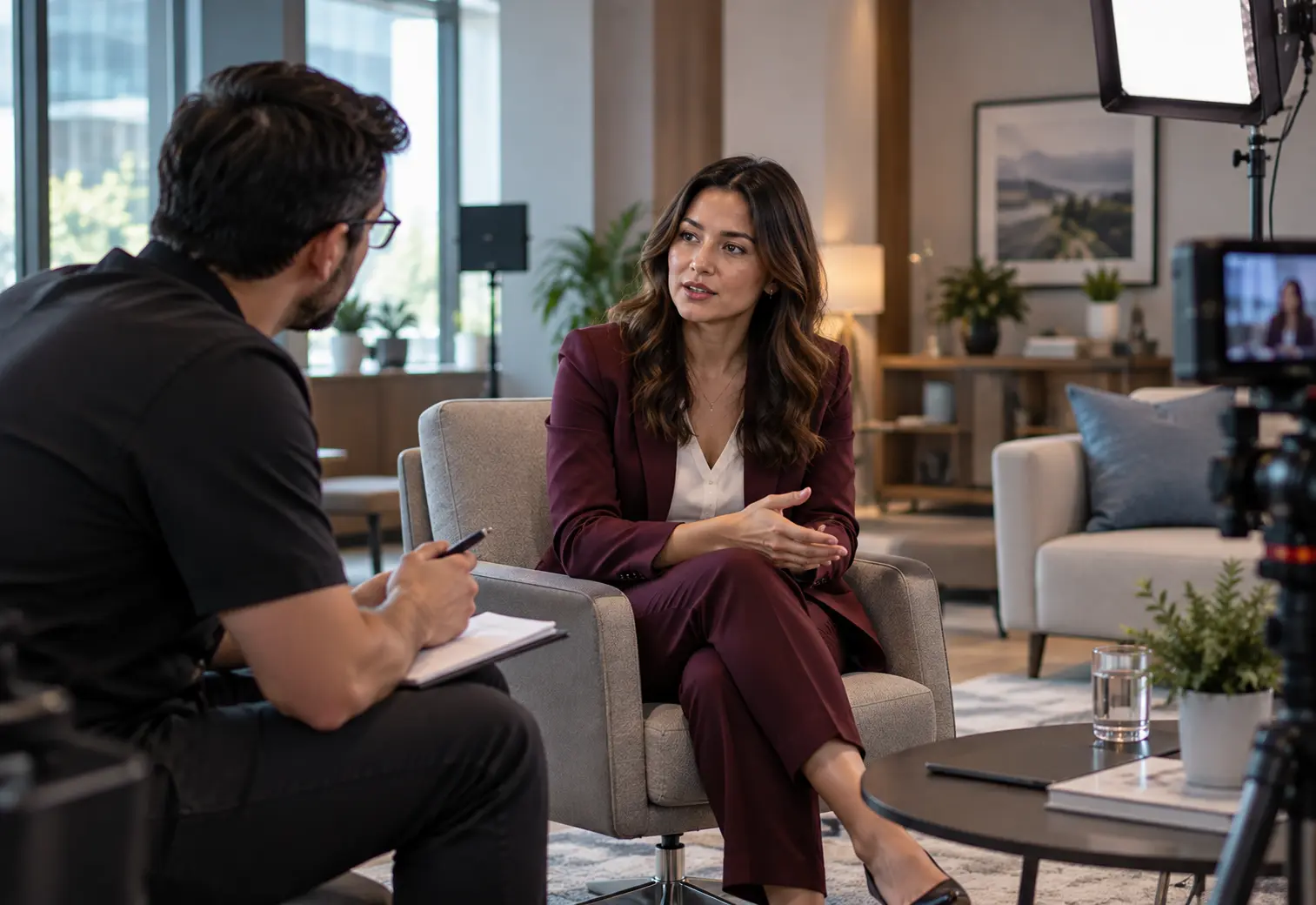
The goal is not to script every sentence. It is to identify the topics that need to be covered, the order that makes sense and whether the answers should be short and self-contained or more conversational.
What information needs to come from the contributor.
Questions or prompts that cover those topics without scripting answers.
Which subjects should come first and which can follow naturally.
Whether the edit needs concise standalone responses or a longer conversation.
Contributor preparation
People generally speak more naturally when the process is clear. Before recording, it can help to explain the interview format, likely topics, how long the session may take, where to look and how the conversation will work.
During the interview
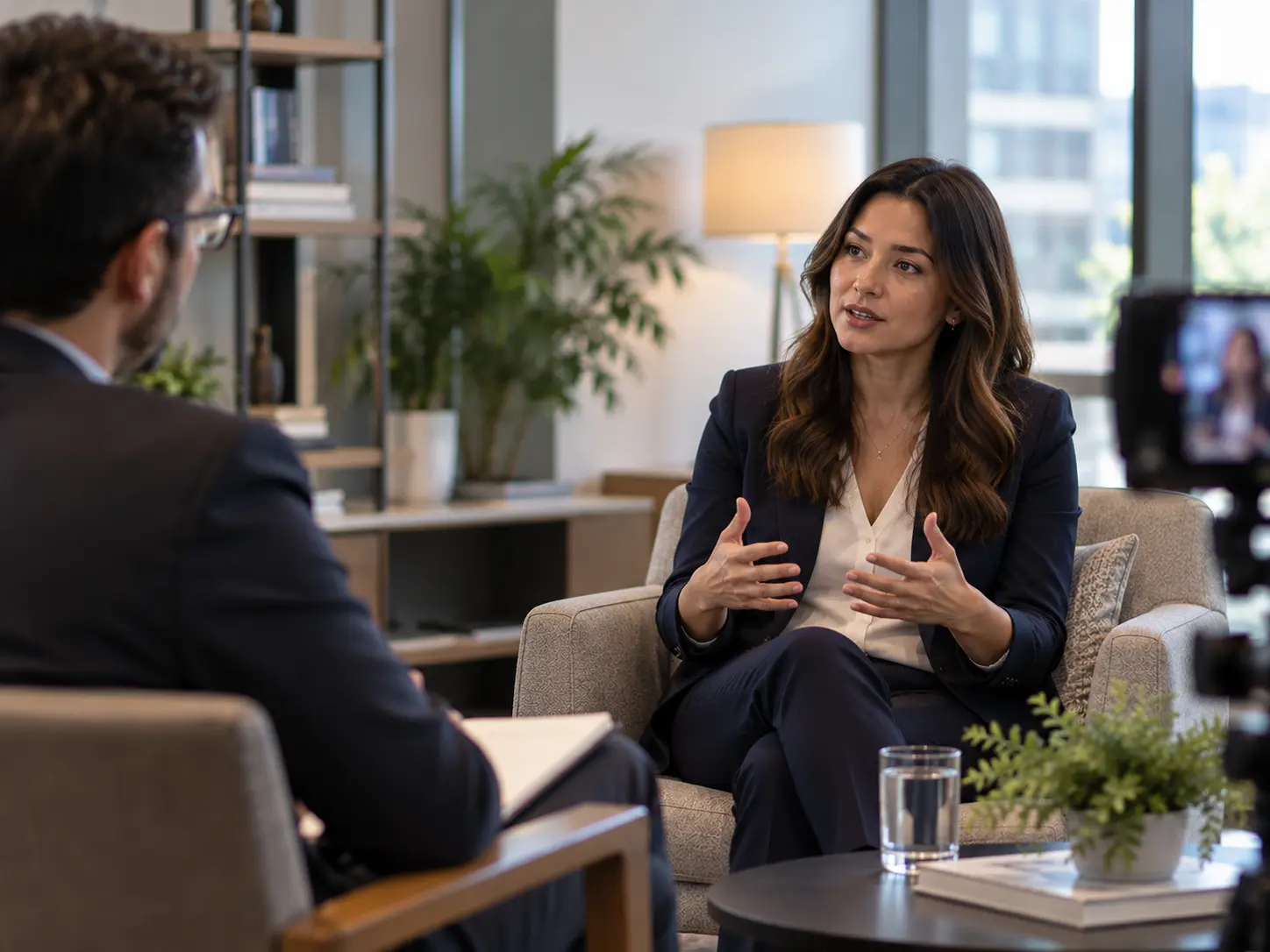
A natural eye line and clear interaction with the interviewer can make the recording feel more direct. The production should support the contributor without making the equipment the center of attention.
Room and background
An interview location needs more than an open chair. Reviewing the room early helps identify what the contributor will hear, what the camera will see and what could interrupt an answer.
What appears behind the contributor, how much depth the room provides and whether anything distracting or private is visible.
HVAC, hallways, nearby conversations and other room noise.
Available daylight and existing room light can change the look of the interview.
Enough practical room is needed for the contributor and recording position.
Doors, foot traffic and normal workplace activity can interrupt an otherwise good answer.
Interview position
Chair position, background distance and where the contributor sits relative to the room can change how professional the interview feels. Sometimes a small adjustment in position makes more difference than adding more equipment.
Executive interviews
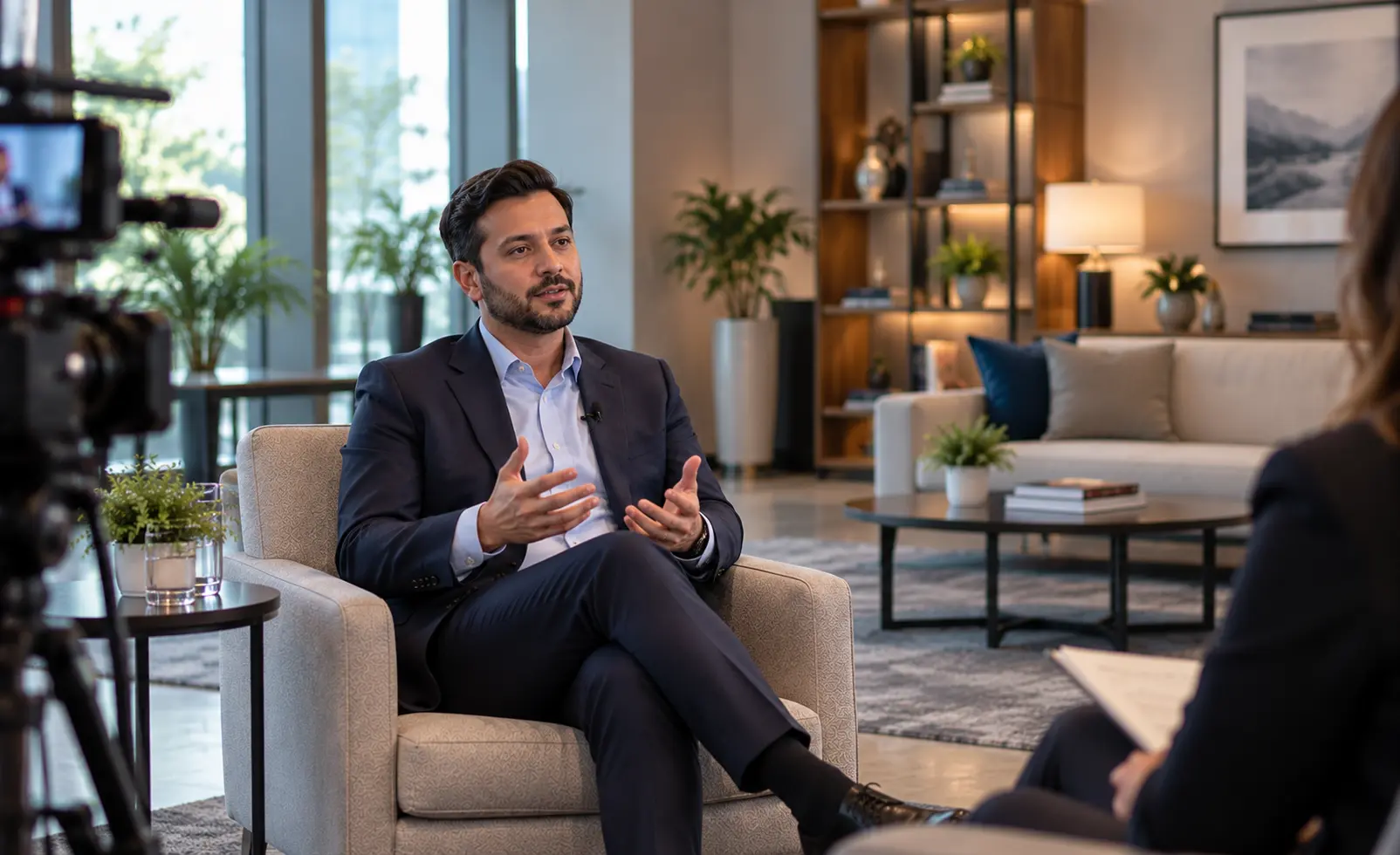
Leadership contributors may have a short recording window. In that situation, priority topics, the location and the intended answers should be understood before the person arrives. Room readiness and whether responses need to be concise or conversational matter when time is limited.
Explore corporate video production →Subject-matter interviews
An expert may need more time to explain a technical, organizational or educational topic clearly. The interview plan should identify which details matter to the intended audience and which can be left out of the final edit.
Event interviews
When an event provides access to speakers, attendees or organizational representatives, interviews can be planned around the program when they are included in the scope.
Learn about event video production →Editing interview footage
Interview footage may need complete answers, selected excerpts or a longer conversation depending on the agreed final use. Knowing that before recording can affect how questions are asked and how answers are structured.
Interview workflow
Clarify who is speaking, who will watch and what needs to be covered.
Organize the subjects and questions without scripting the contributor’s answers.
Check background, sound, available light, privacy and practical working space.
Capture the planned interview at a pace appropriate for the contributor and schedule.
Select and organize the interview material according to the project deliverables.
Regional service
Projects can be scoped throughout Washington DC, Maryland and Northern Virginia. Office, institutional and event locations vary, so room sound, background, available light, access and contributor schedules are useful details to share early.
View our service area →Planning FAQ
Projects may involve executives, organizational leaders, subject-matter contributors, employees or scheduled event participants.
Review the purpose, likely topics, intended audience and available time. It also helps to know where to look and how the conversation will proceed.
No. Topics and prompts can be planned in advance without scripting every answer. The goal is to cover the necessary information in the contributor’s own words.
An office may work well after the location is reviewed for available space, sound, background, light and possible interruptions.
The background should support the subject without becoming distracting. Room depth, private information, visual clutter and the contributor’s position all matter.
That depends on the schedule, contributor availability, location and the scope of each interview.
Yes, when they are scheduled and included in the scope. See Event Video Production for recording planned around a live program.
Editing can be included according to the agreed deliverables, whether those call for complete sections, selected excerpts or interview material used in another video.
Start a project
Share who will be speaking, the topics that need to be covered, where filming may happen and how the finished interview will be used. That is enough to begin planning the recording.
Request a Quote ↗